
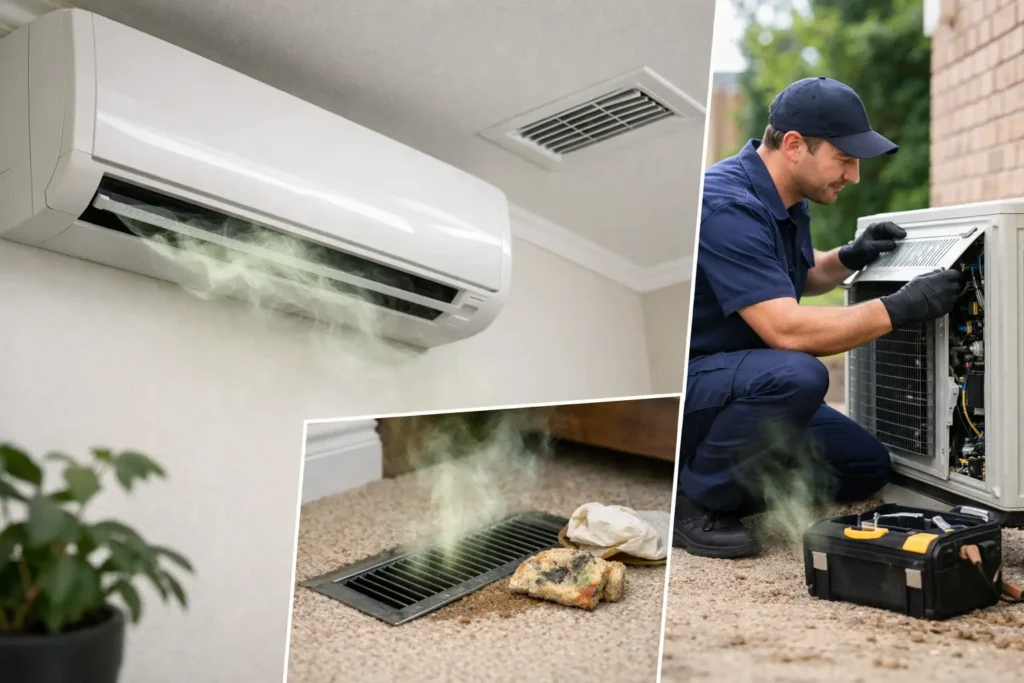
A bad smell from the air conditioner is hard to ignore when it blows through every room. If you are asking, why does air conditioner smell, the answer is usually moisture, dust, biological growth or an electrical issue somewhere in the system. The type of odour matters. It can point to a simple maintenance job, or it can be an early warning that your family, tenants or staff should not keep using the unit until it has been checked.
For Melbourne homes and commercial properties, air conditioning often sits unused for periods before being switched on during a warm spell. That first burst of stale air may pass quickly. A smell that returns every time the system runs is different. It means the source is still inside the unit, ductwork, drains or surrounding ventilation components.
Why does an air conditioner smell when it starts?
A brief dusty smell after months without use is common. Dust settles on filters, indoor coils, vents and within ducts. Once the system starts, moving air carries those particles back into the room. Replacing or washing the filter may improve the situation, but it will not solve deeper build-up on coils or inside ducted return-air pathways.
Persistent smells are more likely caused by moisture. Air conditioners remove humidity as they cool, creating condensation around the indoor evaporator coil. That water should drain away through a condensate line. When dirt, slime or a blockage stops it draining properly, moisture remains in the unit and creates the ideal conditions for mould, mildew and bacteria.
The result is often a musty, sour or “dirty socks” smell. It may be strongest just after the system starts, when air first passes over damp coils and internal surfaces. In ducted systems, contaminated dust and moisture can also spread the odour further through the home or workplace.
What different air conditioner smells can mean
The smell gives useful clues, although it is not a substitute for a professional inspection. If the odour is strong, unusual or causing headaches, throat irritation or breathing discomfort, switch the system off and arrange an assessment.
Musty, mouldy or damp smell
This is the most common complaint. It usually indicates mould or mildew around the evaporator coil, drain pan, drain line, filter or ductwork. A dirty split-system head can hold a surprising amount of grime behind the filters, particularly on the coil fins and blower wheel where moisture collects.
For ducted heating and cooling, the problem may be in the return-air grille, filter compartment, internal ducts or vents. Cleaning only the visible grille can make the room look better without removing the material affecting the air stream.
Sour, sweaty or dirty-socks smell
A sour smell is often bacterial growth on a damp coil or in a drain pan. It can be particularly noticeable when cooling begins or ends. Running the fan-only mode briefly after cooling may help dry the coil, but established contamination needs a proper clean rather than a fragrance spray or surface wipe.
Dusty or stale smell
Dust, pet hair, pollen and household debris accumulate when a system is not regularly maintained. This odour may be mild, but it can aggravate allergies and make rooms feel stuffy. Properties near busy roads, building sites or dry outdoor areas can experience faster dust loading, as can homes with pets.
A dusty smell can also mean the ducted system is drawing air through a dirty return-air filter. Check the filter first, but do not force a heavily clogged filter back into service. Restricted airflow makes the system work harder and can reduce heating and cooling performance.
Burning, hot plastic or electrical smell
Treat this smell seriously. A light burning-dust smell may occur briefly when a heating system is used for the first time in a season, but a persistent burning smell is not normal. It may relate to overheating components, wiring, a motor, an electrical fault or debris near a heat source.
Turn the unit off at the controller and, if safe to do so, isolate power at the appropriate switchboard circuit. Do not continue testing it or try to wash internal electrical components. Arrange a licensed technician or qualified HVAC professional promptly.
Rotten egg, sewer or dead-animal smell
A rotten egg or sewer-like odour can sometimes come from a dry drain trap, plumbing issue or contaminated drain line near the HVAC system. In other cases, rodents, insects or small animals may have entered roof-space ducting or died near an intake. This requires investigation, removal where necessary, and cleaning of affected areas.
If you suspect a gas leak, leave the area if needed, avoid flames and electrical switches, and contact the relevant emergency gas provider or licensed gas professional immediately. Do not assume the smell is just an air conditioning problem.
Chemical or sweet smell
Chemical smells can have several causes, including cleaning products, stored chemicals, electrical issues or, less commonly, refrigerant-related faults. Refrigerant itself is not always easy to identify by smell, so avoid guessing. If the system is also cooling poorly, making hissing noises or icing up, book a licensed air conditioning technician to inspect it.
The hidden places where odours build up
A clean-looking air conditioner can still smell because the source is usually behind the cover. Split systems commonly harbour build-up on the evaporator coil, condensate tray, drain line and cross-flow fan. The fan barrel is especially easy to miss in a basic filter clean, yet it can hold dust and microbial growth that is repeatedly blown into the room.
Ducted systems have more potential collection points. Return-air grilles pull in hair, lint and dust. Filters catch some of it, but not always all of it, especially if filters are damaged, poorly fitted or overdue for replacement. Ducts, supply vents and the air handling section can then retain fine debris that affects airflow and indoor air quality.
Commercial premises add another layer of complexity. High occupancy, long operating hours, food preparation, bathrooms, printing areas and warehouse dust can all affect ventilation. A school, office or property-managed building may need scheduled cleaning and inspection rather than waiting for staff or tenants to report an odour.
What you can do before booking a clean
Start with the safe, accessible maintenance tasks. Turn the system off, remove the filters according to the manufacturer’s instructions and vacuum loose dust. If the filters are washable, clean and dry them completely before refitting. Never reinstall a damp filter, as that can feed mould growth.
Check visible vents and return-air grilles for dust build-up, and make sure furniture, boxes or curtains are not restricting airflow. For a split system, look for obvious water drips, staining on the wall or a blocked-looking drain outlet outside. These signs suggest a drainage problem that needs more than a filter rinse.
Avoid pouring harsh chemicals, bleach or perfumed disinfectant into an air conditioner. These products can damage components, leave residues and mask the smell while the underlying contamination remains. DIY aerosol “air con cleaners” may offer temporary improvement, but they rarely clean the blower wheel, internal drain pathways or duct system thoroughly.
When professional air conditioner cleaning is the right call
Professional cleaning is worthwhile when the smell returns after filter cleaning, when there is visible mould, when water leaks from the indoor unit, or when occupants have ongoing allergy or respiratory symptoms. It is also a sensible preventative step before peak heating or cooling seasons, especially in rental properties and busy commercial spaces.
A proper service focuses on the areas ordinary cleaning misses. Depending on the system, this may include detailed cleaning of coils, blower components, drainage areas, filters, accessible vents and ductwork. HEPA filtration equipment helps capture fine dust during cleaning rather than allowing it to circulate back through the property.
There is a trade-off to consider. A quick filter wash is low-cost and useful for routine upkeep, but it cannot correct blocked drains, deep microbial growth or accumulated duct contamination. On the other hand, not every faint smell requires a full duct clean. The right scope depends on the odour, system type, property use and what inspection reveals.
Keep the air fresh between services
Regular filter care makes a meaningful difference. In a typical home, check filters every one to three months and clean or replace them as required. Homes with pets, allergy sufferers, open windows near traffic or frequent system use may need more frequent attention.
Use the air conditioner as intended and keep it dry where possible. After cooling, allowing the fan to run for a short period can help reduce moisture on internal components if your system has that setting. Address leaks quickly, maintain clear outdoor drainage points, and do not ignore reduced airflow or recurring odours.
A clean air conditioner should cool or heat your space without announcing itself through unpleasant smells. For dependable split-system, ducted heating and cooling, vent and air duct cleaning across Melbourne, contact Top Air Duct Cleaning for a free quote on 0457 666 469 or visit www.topairductcleaning.com.au. Prompt cleaning can help restore fresher airflow before a minor odour becomes a larger indoor air quality problem.
