
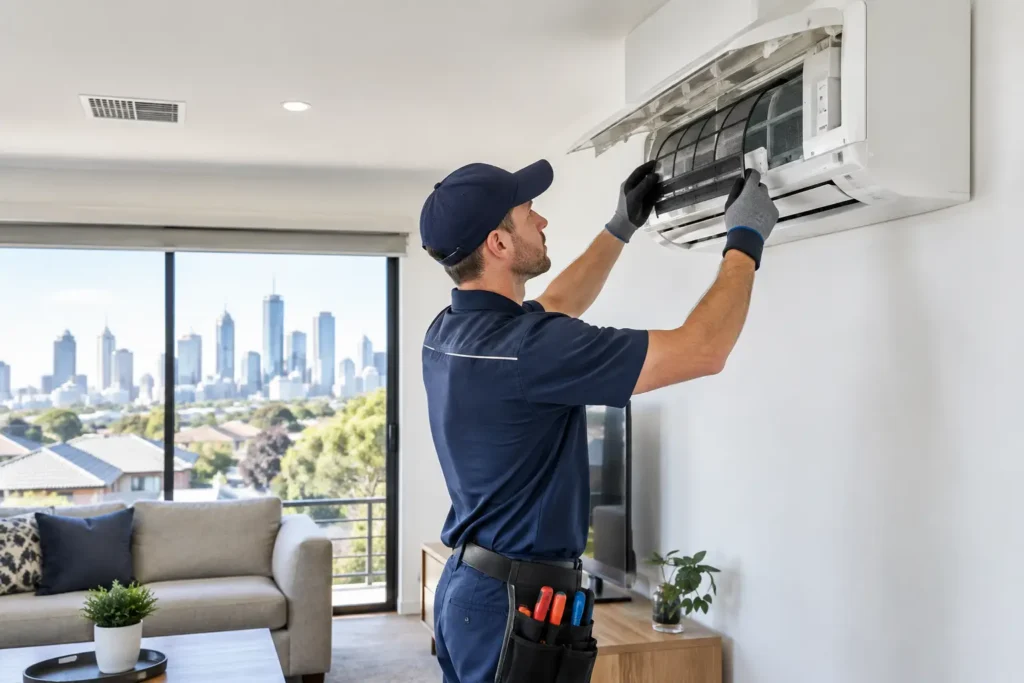
A neglected heater or air conditioner rarely fails without warning. It usually starts with dusty vents, weak airflow, rooms that heat or cool unevenly, rising energy bills or a musty smell when the system starts. This HVAC maintenance checklist helps Melbourne homeowners, property managers and commercial operators identify those warning signs early, protect indoor air quality and keep heating and cooling equipment working as it should.
A good maintenance routine is not only about avoiding breakdowns. It is also about the air people breathe every day. Dust, pet hair, pollen, mould spores and other contaminants can collect in filters, return vents and ductwork. Once airflow is restricted, the system has to work harder and may circulate that build-up throughout the property.
HVAC Maintenance Checklist: Monthly and Seasonal Tasks
Some checks are simple and can be completed by a property owner or maintenance team. Others require a qualified HVAC technician or professional duct cleaning service. The key is knowing the difference and acting before a small issue becomes an expensive repair.
Check and replace air filters
Filters are the first line of defence against dust entering the system. Check them monthly during periods of regular heating or cooling use, especially in homes with pets, smokers, renovations nearby or family members affected by allergies.
A visibly grey, clogged or damaged filter should be replaced straight away. Most disposable filters need changing every one to three months, although the right interval depends on the filter type and how heavily the system is used. A blocked filter reduces airflow, puts strain on the fan motor and can leave rooms feeling stuffy even when the thermostat is set correctly.
If your property uses washable filters, clean and dry them completely before reinstalling them. Putting a damp filter back into the system can encourage mould growth.
Keep vents, returns and outdoor units clear
Walk through the property and check every supply vent, return air grille and exhaust point. Furniture, curtains, boxes and rugs should not block airflow. Return grilles in particular need clear space around them to draw air back into the system efficiently.
For split systems, inspect the outdoor condenser unit. Remove leaves, grass clippings and loose debris from around the unit, and make sure plants are trimmed back. Do not hose electrical components or try to dismantle the cabinet. A clear outdoor unit can release heat properly, helping the system cool more effectively in Melbourne’s warmer months.
Listen, look and smell when the system runs
Unusual noises are worth investigating. Rattling may indicate loose panels or duct connections, while squealing, grinding or repeated clicking can point to a mechanical or electrical issue. A burning smell, electrical odour or strong musty smell should not be ignored.
Musty odours can be caused by moisture, dirty coils, contaminated ductwork or mould around vents. In commercial premises, odours can also travel between work areas when ventilation is not balanced correctly. Turn the unit off if you notice a burning smell or smoke, then arrange professional assessment.
Check thermostat operation and room comfort
Set the thermostat a few degrees above or below the current room temperature and confirm the system responds normally. The display should be accurate, programmed schedules should suit the building’s operating hours and the system should not short-cycle on and off repeatedly.
Also pay attention to comfort across the property. One warm bedroom or a consistently cold office may seem minor, but uneven temperatures can signal obstructed vents, leaking ducts, poor zoning, dirty components or an incorrectly sized system. The cause matters. Turning the thermostat lower or higher will not fix an airflow problem.
Your Pre-Season HVAC Maintenance Checklist
Before winter heating and summer cooling periods, allow time for a more thorough inspection. This is particularly valuable for rental properties, schools, offices and commercial sites where equipment may sit unused for months before being asked to run all day.
Start by checking accessible vents and grilles for dust build-up. Wipe the exterior surfaces with a clean cloth or vacuum carefully using a soft brush attachment. Avoid pushing debris through the grille and deeper into the duct. Check that vent covers are secure and free from rust, damage or visible mould.
Next, inspect accessible duct connections in roof spaces, underfloor areas or plant rooms if it is safe to do so. Look for loose tape, crushed flexible ducting, disconnected sections and signs of pest activity. Ducts are often out of sight, which is why leakage and contamination can go unnoticed until comfort or air quality declines.
For split systems, clean the indoor unit filters according to the manufacturer instructions and inspect the front louvre for dust. If there is black spotting, persistent odour, water dripping from the unit or poor airflow after filter cleaning, the internal coil, fan barrel or drain line may need professional cleaning. Surface wiping alone does not remove contamination from these components.
In ducted systems, check the condensate drain and drain pan where accessible. Water pooling, staining on ceilings or moisture around the indoor unit can indicate a blocked drain. This should be handled promptly to reduce the risk of water damage and mould growth.
Ductwork and Ventilation Need Professional Attention
Changing filters and clearing vents are useful household tasks, but they do not clean the full duct system. Over time, ducting can collect fine dust, construction debris, pet dander, allergens and, in some cases, mould contamination. Exhaust systems can also build up lint, grease or moisture depending on their use.
Professional duct cleaning uses purpose-built equipment to remove debris from beyond the visible vent opening. HEPA filtration is especially valuable because it helps contain fine particles during the cleaning process rather than allowing them to re-enter the indoor environment. For homes with allergy concerns, recent renovations, pets or noticeable dust returning soon after cleaning, this can make a practical difference.
Commercial properties should take an even more structured approach. Offices, childcare facilities, schools, retail spaces and multi-use buildings have different occupancy levels, ventilation demands and maintenance obligations. Kitchen exhaust systems, bathroom exhaust fans and high-use air handling systems require scheduled attention based on their use, not simply when a complaint is made.
A professional inspection can identify damaged ductwork, restricted airflow, dirty return air pathways and ventilation issues that are not obvious from the room. It also provides a clearer basis for planning maintenance rather than guessing at the source of poor performance.
Signs You Should Book HVAC Service Now
Do not wait for the next scheduled check if the system is showing a clear problem. Arrange professional help if you notice any of the following:
- Dust blowing from vents or visible debris around grilles
- Mouldy, stale or burning smells when heating or cooling starts
- Water leaks, condensation or staining near indoor units
- Weak airflow, noisy operation or major temperature differences between rooms
- A sharp increase in energy costs without a clear change in usage
- Household allergy or respiratory symptoms that worsen indoors
These issues have different causes, and a proper inspection prevents wasted money on temporary fixes. For example, a dirty filter may be simple to replace, while persistent dust and odours may point to duct contamination or a system that needs deeper cleaning.
How Often Should HVAC Maintenance Be Done?
For most homes, filters should be checked monthly and changed as needed. A general system check before the main heating and cooling seasons is sensible, while professional servicing is commonly arranged annually. Properties with pets, smokers, allergy sufferers, high occupancy or frequent use may need more regular attention.
Duct cleaning does not follow one identical timetable for every building. It depends on the condition of the ducts, renovation history, indoor air quality concerns, visible dust, pest activity and how the system is used. A commercial property may need a documented maintenance program, while a household may require cleaning when symptoms or inspection findings indicate a build-up.
The best approach is practical rather than automatic: inspect regularly, deal with visible problems quickly and bring in professionals when the issue is beyond the filter or vent cover.
For reliable ducted heating, cooling, split system and ventilation cleaning across Melbourne, Top Air Duct Cleaning provides transparent quotes, fully insured technicians and same-day service when available. Call 0457 666 469 or visit www.topairductcleaning.com.au for a free quote. Clean airflow is easier to maintain than it is to restore after months of neglect.
