A ducted heater can look spotless from the living room while its hidden ducts collect dust, pet hair, pollen and fine debris season after season. Ducted heating cleaning targets the parts you cannot see, helping Melbourne households and property managers improve airflow, reduce circulating dust and keep their heating system working as it should when winter arrives.
For many properties, the first clue is not a dramatic fault. It is a layer of dust returning soon after cleaning, a stale smell when the heater starts, uneven warmth between rooms or family members noticing more irritation from allergies. These issues can have several causes, so cleaning is not a cure-all. But contaminated ductwork and vents are a common, manageable contributor that deserves professional attention.
What ducted heating cleaning actually involves
Ducted heating systems move heated air from a central unit through a network of ducts, then into rooms through ceiling, wall or floor vents. As air travels through that system, particles can settle inside the return-air grille, vents and duct runs. Renovation dust, shedding pets, outdoor pollen and everyday household dust all add to the build-up.
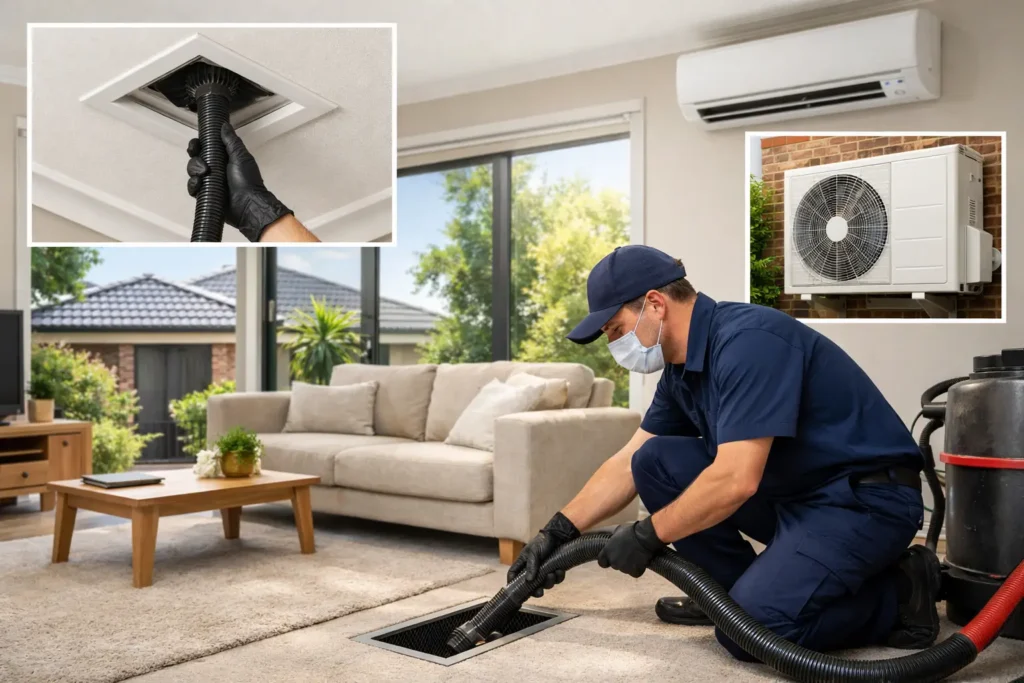
Professional ducted heating cleaning is more than wiping visible vent covers. A proper service assesses the accessible system, removes and cleans grilles where appropriate, and uses specialist agitation tools together with powerful HEPA-filtered vacuum equipment to dislodge and capture debris. The aim is to remove contamination without simply pushing it further through the house.
The heater itself also needs sensible attention. Depending on the system and its condition, a technician may inspect accessible components, check the return-air area and identify issues such as damaged ducting, loose connections or excessive debris. Cleaning does not replace repairs, servicing or electrical work. If a fault is found, it should be addressed by the appropriately qualified professional.
Why dirty ducts affect comfort and air quality
Every forced-air heating system recirculates air. When dust accumulates in its pathways, some particles may be redistributed each time the system operates. This is particularly frustrating in homes with pets, young children, allergy sufferers or occupants who are sensitive to dust.
Cleaning can reduce the dust and debris held within the duct system, but it is not a promise of dust-free living. Homes still receive particles through open doors and windows, foot traffic, textiles and outdoor air. The practical benefit is reducing one significant hidden reservoir of contaminants so regular cleaning around the home is more effective and the air feels fresher when heating is in use.
Airflow matters too. Build-up around return-air points and vents can restrict how freely air moves through the system. In some cases, cleaning helps restore more consistent airflow and allows rooms to warm more evenly. However, major hot and cold spots can also point to poor duct design, leaking ducts, incorrect zoning or an undersized unit. A reputable technician will explain the difference rather than selling cleaning as the answer to every heating problem.
Signs your system is due for ducted heating cleaning
There is no single calendar rule that suits every property. A small household with no pets may have very different needs from a busy family home, childcare centre or commercial tenancy. Still, these signs are worth acting on:
- Visible dust, lint or pet hair around supply vents and the return-air grille
- A musty, dusty or stale odour when heating begins after a long break
- Dust settling quickly on furniture soon after the system runs
- Recent renovations, plaster work, sanding or construction activity
- A move into a previously occupied home with an unknown maintenance history
- Allergy or respiratory irritation that seems more noticeable while heating is operating
For many homes, arranging a professional inspection and clean every few years is a sensible starting point. Properties with pets, smokers, frequent renovations, high occupancy or sensitive occupants may benefit from more regular attention. Commercial premises, schools and managed properties should align cleaning with their broader HVAC maintenance plan, usage levels and indoor-air-quality responsibilities.
After renovation work, act sooner
Fine building dust is one of the strongest reasons to book duct cleaning sooner rather than later. Even when trades use drop sheets and clean carefully, airborne particles can enter return-air vents and travel into ductwork. Starting a heater after renovations without checking the system can spread that fine dust through finished rooms.
The same applies after water damage or suspected mould. Moisture inside ducting needs a careful assessment because cleaning alone may not resolve the underlying source of dampness. The cause must be corrected to prevent the problem returning.
What a professional clean should look like
A quality service begins with clear communication. Before work starts, you should understand what parts of the system can be accessed, what equipment will be used and whether any limitations apply. Flexible ducts, older systems and difficult ceiling access can change the scope of work, so transparent quoting matters.
During the clean, technicians should protect nearby surfaces, access vents safely and use contained extraction methods. HEPA filtration is valuable because it captures fine particles within the vacuum system rather than allowing them back into the indoor environment. Agitation tools help loosen settled debris, while targeted vacuuming removes it from the duct run.
Good workmanship also includes respect for the property. Vents should be refitted securely, work areas left tidy and any visible concerns explained clearly. If duct sections are damaged or heavily deteriorated, replacement may be more appropriate than aggressive cleaning. This is especially true where ageing flexible ductwork is fragile or poorly installed.
At Top Air Duct Cleaning, our fully insured technicians use professional HEPA-filtration equipment and practical cleaning methods designed for residential and commercial ducted systems. We provide straightforward advice, transparent quotes and same-day service across Melbourne when availability allows.
Can you clean ducted heating vents yourself?
Homeowners can make a useful difference between professional services. Turn the system off before cleaning accessible vent covers, then vacuum loose dust around grilles with a brush attachment and wipe the covers with a lightly damp cloth. Keep return-air areas clear of furniture, boxes and laundry so the system can draw air properly.
What you should avoid is pushing a household vacuum hose, broom handle or improvised tool deep into the ducts. This can damage flexible ducting, dislodge connections or move debris beyond reach. Spraying fragrances or disinfectants into vents is also not a substitute for cleaning and may introduce unwanted chemicals into circulating air.
Filter maintenance is equally worthwhile, but requirements vary by heater type. Follow the manufacturer’s instructions and arrange qualified servicing where required. A clean filter and clean ductwork work together, yet neither replaces the other.
Better heating starts before the cold sets in
The most convenient time to arrange duct cleaning is before the heater becomes essential. Booking ahead of winter gives you time to deal with dust build-up, investigate unusual odours and identify any ducting concerns before the first cold snap. For rental providers and property managers, it can also be scheduled between tenancies or alongside planned maintenance to minimise disruption.
A professionally cleaned system supports a cleaner, more comfortable indoor environment, but the best results come from realistic expectations and regular care. Keep vents unobstructed, maintain filters as directed and address moisture or system faults promptly. Those small actions help protect the work done inside the ducts.
For dependable ducted heating cleaning in Melbourne, request a free quote from Top Air Duct Cleaning on 0457 666 469 or visit www.topairductcleaning.com.au. Cleaner ducts are a practical step towards warmer rooms, fresher air and greater confidence when you switch the heating on.
