A dusty coffee table a day after cleaning is frustrating, but it can also be one of the first signs your air vents need cleaning. When your ducted heating or cooling system circulates air through dirty vents and ductwork, it may redistribute dust, lint, pet dander and other airborne particles throughout the property.
Vent cleaning is not simply about making grilles look tidy. In homes, offices, schools and commercial properties, clean vents and ducting support better airflow, a cleaner indoor environment and more reliable HVAC performance. Here are the warning signs worth acting on.
9 signs your air vents need cleaning
1. Dust builds up quickly after you clean
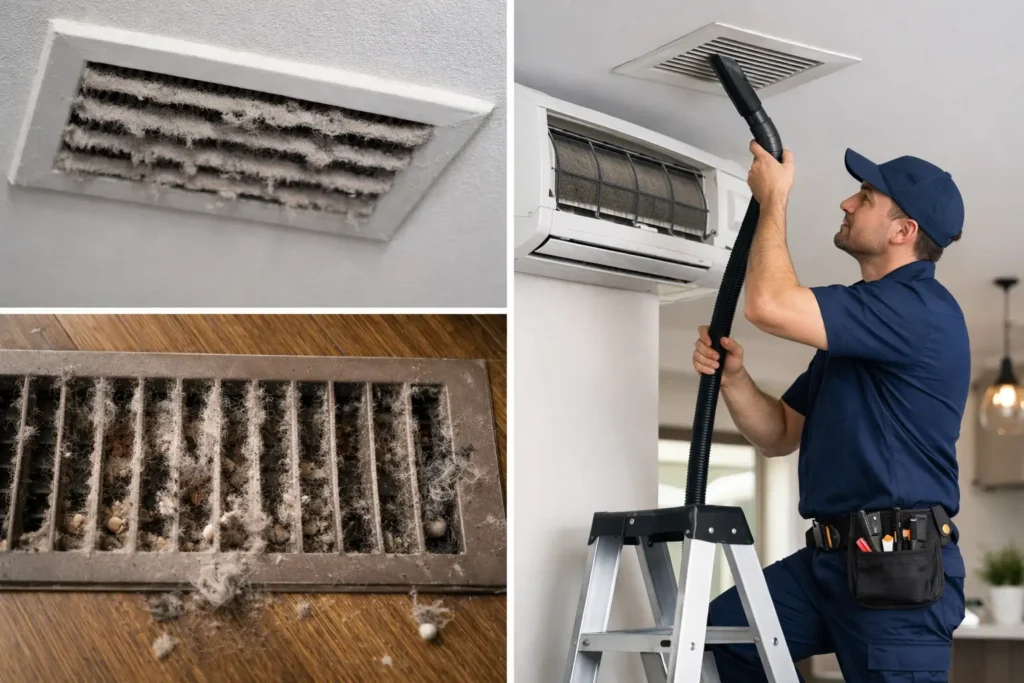
If benches, floors and furniture seem dusty again within a day or two, inspect the supply vents around the property. A visible layer of dust on the grille is a clear clue, but the bigger issue can sit behind it in the ductwork.
No home is completely dust-free, especially during a dry Melbourne summer or when windows are regularly open. However, constant dust buildup despite normal cleaning can mean your ventilation system is carrying accumulated debris back into occupied rooms. Professional cleaning removes buildup from areas a household vacuum cannot reach effectively.
2. Airflow feels weak or uneven between rooms
A room that is always too warm in summer or too cold in winter may have an airflow problem. Dirty vents and ducting can restrict the volume of conditioned air reaching a room, particularly where dust has collected around grilles, return-air vents or internal duct runs.
Weak airflow is not always caused by dirty ducts. A blocked filter, closed damper, damaged flexible duct, undersized system or mechanical fault can also be responsible. That is why a proper inspection matters. Cleaning helps where contamination is the restriction, while a technician can identify when another HVAC repair is needed.
3. There is a stale or musty smell when the system starts
A musty odour that appears when heating or cooling switches on should not be ignored. It can indicate dust, moisture, mould growth or organic material within vents, ducts, filters or the air-handling unit.
In some cases, the smell is strongest after the system has been off for weeks. This is common when dust and moisture have had time to settle. Cleaning the visible vent alone rarely solves the underlying issue. The ductwork, return-air pathway and relevant system components need to be assessed so the source can be properly addressed.
4. You can see dark marks, mould or residue around vents
Dark spotting, streaks or fuzzy growth around a vent is a reason to arrange professional attention promptly. Mould needs moisture to develop, so visible growth may point to a condensation issue, water ingress, poor insulation or an underlying ventilation problem as well as contamination.
Avoid disturbing suspected mould with a dry brush or household vacuum. That can spread spores into the room. A qualified cleaning team can safely assess the affected area, use suitable HEPA filtration equipment and advise whether further investigation is required to control the moisture source.
5. Allergy or respiratory symptoms are worse indoors
Sneezing, itchy eyes, coughing or a blocked nose can have many causes, including pollen, pets and seasonal illness. But if symptoms consistently worsen at home, at work or when the ducted system runs, the indoor air environment deserves attention.
Dust, pet hair, dander and fine particles can collect in return-air vents and ducts over time. Cleaning is not a medical treatment, and it cannot remove every allergen from a building. It can, however, reduce a common reservoir of airborne debris and improve the cleanliness of the system circulating air through the property.
6. You have recently renovated, moved in or completed building work
Renovation dust travels further than most people expect. Plaster, sawdust, concrete particles and insulation fibres can enter open vents during construction, even when work areas are covered. A property can look spotless on the surface while the ducting still contains a significant amount of fine debris.
The same applies after moving into an existing property. You may not know when the vents were last professionally cleaned, whether previous occupants had pets, or whether smoking, building work or water damage occurred. A post-renovation or pre-move-in duct clean gives you a cleaner starting point and helps protect the HVAC system from avoidable buildup.
7. The vents look dirty, greasy or clogged
Visible debris around a supply or return grille is the simplest warning sign. Dust clumps, pet hair, cobwebs and lint can reduce airflow at the entry point and make rooms look neglected. In commercial settings, particularly kitchens and busy shared facilities, grease and heavier airborne residue can create additional hygiene and fire-safety concerns.
You can carefully vacuum and wipe the exterior of a vent as part of regular cleaning. Do not push tools, wet cloths or household chemicals deep into the opening. Flexible ducts and internal components can be damaged, and surface cleaning does not remove the buildup further along the system.
8. Your heating and cooling system is working harder than usual
Longer run times, inconsistent temperature control and rising energy bills can all suggest reduced HVAC efficiency. Dirty ductwork is one possible contributor because the system must work harder when air movement is restricted.
It depends on the condition of the whole system. A neglected filter, refrigerant issue, ageing fan motor or poor duct design may have a larger effect than dirty vents alone. Still, professional duct and vent cleaning is a practical maintenance step that can improve airflow and help your system operate closer to its intended performance.
9. It has been years since the vents were professionally cleaned
There is no single cleaning schedule that suits every property. A small home with no pets and little system use will have different needs from a busy family home, childcare centre, rental property or commercial site operating long hours.
As a guide, it is sensible to consider an inspection every few years, or sooner when you have pets, smokers, recent renovations, allergy concerns, visible dust or airflow issues. Property managers and commercial building operators may benefit from a planned maintenance schedule based on occupancy, system use and the nature of the premises.
What professional air vent cleaning should involve
A worthwhile service goes beyond removing dust from the grille. Professional technicians inspect accessible vents and ducting, use specialised agitation and extraction methods, and capture loosened contaminants with HEPA-filtered equipment. This helps prevent debris from being released back into the rooms being cleaned.
The work should also be explained clearly. You should know what areas are included, what condition has been found and whether there are concerns such as damaged ducts, excess moisture, mould risk or restricted airflow. Transparent advice is especially valuable for schools, strata properties, offices and commercial operators who need maintenance records and dependable service.
When to act quickly
Book an inspection promptly if you can see mould, smell persistent burning or mustiness, notice a sudden loss of airflow, or find animal droppings or nesting material near vents. If there is a burning smell, unusual noise, electrical issue or a suspected gas appliance fault, switch the system off where safe and contact the appropriate licensed technician or emergency service.
For routine dust and airflow concerns, early cleaning is usually easier and more cost-effective than waiting until contamination becomes severe. Clean ducts, vents and filters help create the kind of indoor environment people notice for the right reasons: fresher air, less dust and more consistent comfort.
Top Air Duct Cleaning provides professional residential and commercial vent and duct cleaning across Melbourne, with transparent quotes, fully insured technicians and same-day service when available. For a free quote, call 0457 666 469 or visit www.topairductcleaning.com.au. A clean system is a practical step towards a more comfortable, healthier property.
