
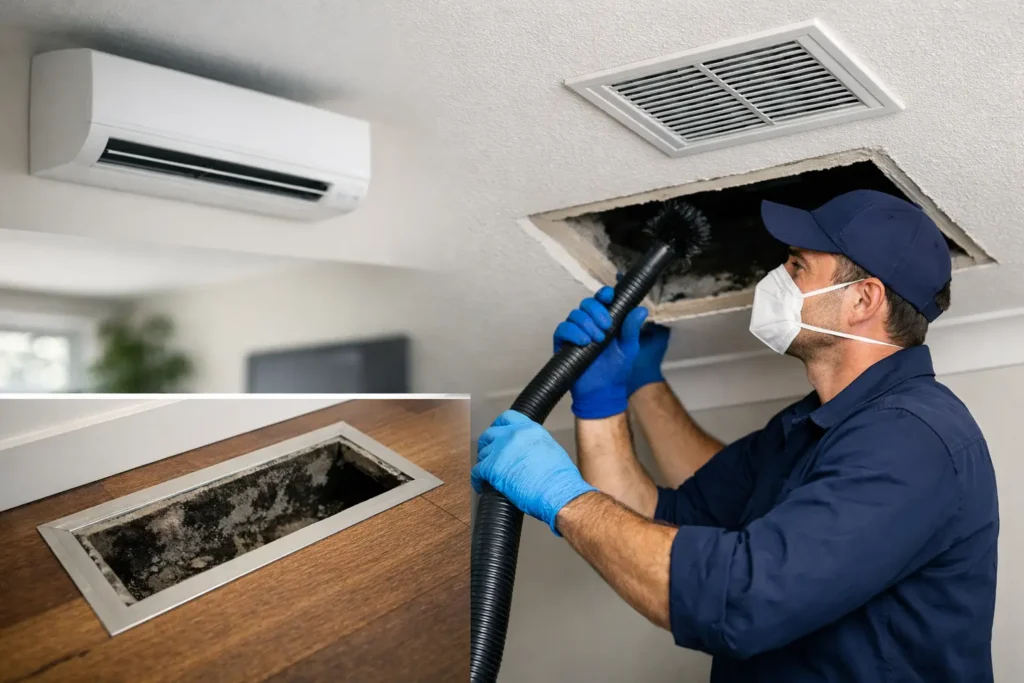
A musty smell that returns whenever the heating or cooling starts is not something to cover up with air freshener. Mould in air ducts can circulate spores, odours and fine particles through the rooms where people live, work and sleep. For Melbourne homes, rentals, schools and commercial properties, it can also point to an underlying moisture problem that needs proper attention.
What mould in air ducts can mean for your property
Ductwork is usually out of sight, so a problem can build for some time before it becomes obvious. If warm, humid air meets a cool duct surface, condensation can form. Add dust, skin cells and other organic material that naturally collect in an HVAC system, and mould can have the moisture and food source it needs to grow.
The concern is not simply that the ducts look unclean. When the system operates, airflow may disturb contaminated dust and spores. This can worsen stale odours and may be particularly uncomfortable for people with allergies, asthma or respiratory sensitivities. It can also make a clean-looking room feel dusty soon after vacuuming.
Not every mark inside a vent is mould. Dark residue may be ordinary dust, soot, insulation fibres or staining caused by moisture. However, visible fuzzy growth, recurring black or green spotting, persistent damp odours, or moisture around vents are signs worth investigating. A professional inspection can help distinguish surface dust from a mould issue and identify the likely source.
Common causes of mould in air ducts
Mould does not develop in a dry, well-maintained system without a reason. Cleaning is an essential part of the solution, but lasting results also rely on controlling the moisture that allowed the growth to begin.
Condensation in heating and cooling systems
Air conditioning can create condensation as it removes humidity from the air. If the condensate drain is blocked, the drain pan is damaged, insulation is inadequate, or the system is not draining correctly, water can remain where it should not. Condensation can also occur when poorly insulated ducts pass through roof spaces or other areas with major temperature changes.
High indoor humidity and poor ventilation
Bathrooms, laundries, kitchens and enclosed rooms produce moisture every day. Exhaust fans that are blocked, underperforming or venting incorrectly can allow humidity to linger. In commercial settings, inadequate extraction around kitchens, bathrooms or high-occupancy spaces can create similar conditions.
Dust build-up and neglected filters
Dust alone does not always cause mould, but it gives mould something to settle on. Dirty filters, leaky duct joints and long periods without duct cleaning can increase the amount of debris within the system. Restricted airflow may also reduce HVAC performance, causing parts of the system to run longer and increasing opportunities for condensation.
Water damage or roof leaks
A roof leak, plumbing leak or flooding event can affect ducting in ceiling cavities and underfloor areas. Even after the visible water damage is repaired, insulation and duct materials may remain damp. If a musty smell started after heavy rain or a leak, that history matters when diagnosing the problem.
Signs you should arrange an inspection
A dirty return-air grille does not automatically mean that the entire system has mould. Still, certain warning signs should not be ignored, especially if they recur after basic cleaning.
Look for a musty or earthy smell that becomes stronger when the system is running; visible discolouration or fuzzy residue around vents; damp patches near registers or air handlers; condensation that appears repeatedly; or occupants reporting more coughing, sneezing or irritated eyes in particular rooms. You may also notice weak airflow, unusually dusty surfaces or an HVAC system that seems to be working harder than usual.
For property managers and commercial operators, complaints from several occupants should be treated as a maintenance issue rather than an isolated preference. Early inspection helps prevent minor contamination or drainage faults from becoming a larger disruption.
Why spraying mould remover into vents is not the answer
It is understandable to want a quick fix, but household sprays are rarely an effective solution for duct contamination. Spraying chemicals through a vent may not reach the affected areas, can leave residue in the system, and does nothing to remove accumulated dust or correct the moisture source. Strong products may also create unpleasant fumes that circulate indoors.
Opening accessible vent covers and gently vacuuming loose dust can help with routine upkeep. Beyond that, avoid disturbing suspected mould inside ducts, ceiling cavities or air-conditioning components without suitable containment and equipment. Scrubbing a small visible patch may spread particles further through the system or hide a problem that continues deeper inside.
The right approach depends on the type of ducting, the extent of contamination, whether moisture is active, and the condition of filters, coils, drains and insulation. Flexible ducting, for example, needs careful handling to avoid tears and airflow restrictions. Severely water-damaged or contaminated materials may need replacement rather than cleaning alone.
Professional mould removal from air ducts
A proper service begins with assessment, not guesswork. Technicians should inspect accessible ductwork, supply and return vents, the central unit and related components for dust build-up, signs of moisture and possible contamination. The aim is to understand both where the issue is showing and why it is happening.
Professional cleaning uses specialised equipment to dislodge built-up debris while HEPA filtration captures fine dust and particles instead of releasing them back into the property. Registers, returns and accessible duct sections are cleaned methodically, with attention also given to areas that can affect air quality and system performance, such as filters and HVAC components where appropriate.
Where mould is suspected, the priority is safe removal and moisture control. Depending on the findings, this may include cleaning affected accessible surfaces, recommending repairs to drainage or insulation, improving ventilation, or replacing materials that cannot be reliably restored. An honest contractor should explain the condition found, the work proposed and any limitations before proceeding.
Top Air Duct Cleaning provides professional ducted heating and cooling cleaning across Melbourne, using advanced HEPA filtration equipment and practical cleaning methods designed to reduce dust, allergens and mould-related build-up. Our fully insured technicians provide clear advice and transparent quoting, so you know what needs to be done before work starts.
Preventing mould from returning
After cleaning, a few maintenance habits make a meaningful difference. Replace or clean HVAC filters in line with the manufacturer’s advice and your property’s conditions. Homes with pets, renovation dust, allergies or heavy system use may need more frequent filter checks than a lightly used household system.
Keep condensate drains and drain pans maintained, and have recurring water leaks repaired promptly. Use bathroom, laundry and kitchen exhaust fans during and after moisture-producing activities. If condensation regularly forms around vents, ask a qualified technician to assess insulation, airflow balance and duct condition rather than assuming the vent itself is the only problem.
Regular professional duct cleaning can also help reduce the dust and debris that supports contamination. There is no single schedule for every property. A busy childcare centre, restaurant, rental portfolio or home with pets may benefit from more frequent inspection than a low-occupancy home. The sensible interval depends on usage, indoor conditions, maintenance history and any known moisture issues.
If you can smell dampness when your heating or cooling turns on, act before the issue becomes part of the building. Call Top Air Duct Cleaning on 0457 666 469 or visit www.topairductcleaning.com.au for a free quote and reliable advice on restoring cleaner, fresher airflow.
