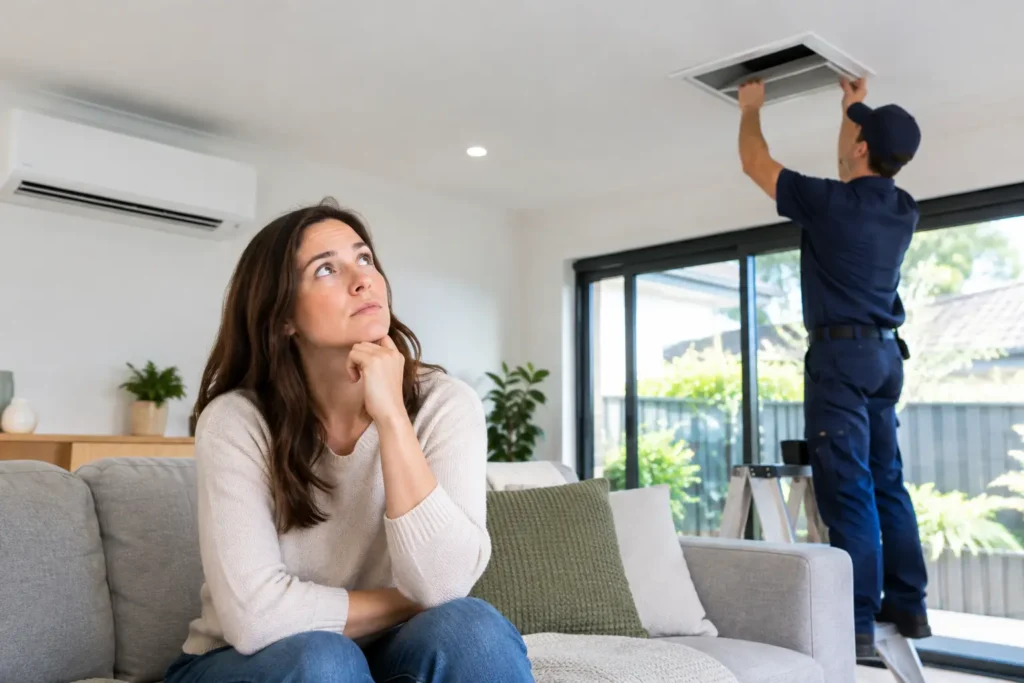
A room can look spotless and still feel unpleasant to sit in. If the air feels heavy, smells musty after the house has been shut up, or leaves people coughing, sneezing or unusually tired, the issue may be more than a quick need to open a window. Understanding the top causes of stale indoor air helps homeowners and building managers fix the source rather than masking it with sprays or scented candles.
Stale air usually develops when fresh air cannot enter properly, contaminated air cannot leave, or heating and cooling systems circulate dust and moisture through occupied spaces. In Melbourne properties, this can become more noticeable during wet weather, winter heating periods and hot days when windows stay closed and air conditioning works harder.
What makes indoor air feel stale?
Indoor air becomes stale when pollutants, humidity, odours and carbon dioxide build up faster than they can be removed. People, pets, cooking, showers, cleaning products and furnishings all add particles or gases to the indoor environment. That is normal. The problem starts when a property does not have sufficient airflow or when its ventilation system is dirty, restricted or poorly maintained.
A stale room is not always a sign of a serious hazard, but it should not be ignored. Persistent odours, visible dust around vents, condensation, mould marks or uneven heating and cooling can point to a maintenance issue that affects both comfort and system performance.
Top causes of stale indoor air
1. Dirty air ducts and return vents
Ducted heating and cooling systems move a large volume of air through the home or workplace. Over time, dust, pet hair, lint, pollen and other debris can settle inside ductwork and around return-air grilles. Each time the system operates, some of this material may be disturbed and circulated through rooms.
Dirty ducts do not automatically mean every indoor air issue comes from the HVAC system. However, if there is a dusty smell when the unit starts, black dust around vents, reduced airflow or ongoing allergy symptoms, duct contamination is worth investigating. A professional clean using HEPA filtration equipment removes built-up debris without simply releasing it back into the property.
2. Clogged filters and neglected split systems
Filters protect the indoor components of heating and cooling equipment, but they only work when they are regularly cleaned or replaced. A blocked filter restricts airflow, forces the system to work harder and allows dust to accumulate around coils and fan components.
Split systems need attention too. Their indoor heads can collect dust and moisture on filters, evaporator coils and drain areas. This combination can create unpleasant smells when the unit runs and, in some cases, support microbial growth. Cleaning the visible filter helps, but a heavily soiled unit may require professional internal cleaning to restore hygiene and airflow.
3. Too little fresh-air ventilation
Modern homes are often sealed tightly to improve energy efficiency. While that can reduce heat loss and cooling costs, it also means less natural air exchange. Bedrooms, meeting rooms, classrooms and small offices are especially prone to feeling stuffy when several people occupy the space with doors and windows closed.
Carbon dioxide from breathing is not usually the only issue, but rising levels can make a room feel stale and uncomfortable. Where safe and practical, opening windows on opposite sides of a building for a short period can improve cross-ventilation. In commercial settings or properties without operable windows, mechanical ventilation must be properly designed, clean and functioning as intended.
4. Excess moisture from bathrooms, kitchens and laundries
Moisture is one of the most common contributors to stale indoor air. Steam from showers, boiling pots, clothes drying indoors and unvented appliances can raise humidity quickly. If that moisture is not extracted outside, it settles on cold surfaces and can encourage mould growth in bathrooms, wardrobes, ceiling corners and behind furniture.
An exhaust fan that is noisy, weak or covered in dust may not be removing enough humid air. Kitchen rangehoods can also lose effectiveness when filters and ducts become greasy or blocked. The result is lingering cooking odours, condensation and a damp feeling that air freshener cannot solve.
5. Mould growth and hidden dampness
Mould has a distinctive musty smell, but visible patches are not always the first warning sign. Water leaks beneath sinks, roof leaks, rising damp, poor drainage and condensation inside wall cavities can create hidden damp areas. Mould spores and musty odours may then enter living spaces through gaps, vents or air movement pathways.
Cleaning surface mould without addressing the moisture source is only a short-term fix. Property owners should identify why the area is wet, improve ventilation and repair leaks promptly. Where mould contamination is widespread or repeatedly returns, professional assessment is the safer option.
6. Blocked or underperforming exhaust systems
Bathroom, toilet, laundry and commercial exhaust systems have one job: remove contaminated air at the source. When grilles are clogged with lint and dust, fan blades are dirty, ducts are restricted or the system vents into a roof space instead of outdoors, stale air remains trapped indoors.
For commercial kitchens, neglected exhaust is a more serious concern. Grease accumulation can affect air quality, reduce extraction performance and increase fire risk. Regular cleaning is essential for a cleaner working environment and for maintaining safe operation.
7. Furnishings, cleaning products and indoor pollutants
New carpets, furniture, paint, adhesives, fragrances, aerosols and some cleaning products can release volatile organic compounds, often called VOCs. These can contribute to headaches, throat irritation or chemical odours, particularly in enclosed rooms. Smoking or vaping indoors, scented candles and incense can add further fine particles to the air.
The practical approach is moderation. Choose lower-odour products where possible, store chemicals securely, avoid using strong sprays in poorly ventilated rooms and allow fresh air into newly painted or furnished spaces. An air purifier can assist with some particles, but it does not replace source control or adequate ventilation.
8. Pet dander, dust and everyday household buildup
Even a well-kept home produces dust. It is made up of fibres, skin cells, outdoor particles, pet dander and other fine material that settles on floors, furniture and inside vents. Properties with pets, carpets, busy households or nearby construction may experience faster buildup.
Regular vacuuming with a quality filtered vacuum, washing bedding and cleaning return-air grilles can make a noticeable difference. If dust returns quickly after cleaning or is being blown from vents, the wider HVAC system may need professional attention.
Signs your property needs more than a quick clean
A temporary stale smell after a closed-up weekend can be normal. Ongoing symptoms are different. Book an inspection if you notice persistent musty or burnt smells, weak airflow, visible dust around supply vents, mould, repeated condensation, noisy exhaust fans or a noticeable decline in heating and cooling performance.
For landlords, property managers and commercial operators, recurring complaints from tenants, staff or customers should also be taken seriously. Clean ventilation is not just a comfort feature. It supports healthier, more usable spaces and can help equipment run more efficiently.
Practical steps to improve indoor air quality
Start with the simple checks: clean or replace filters according to the manufacturer’s guidance, run bathroom exhaust fans during and after showers, use kitchen extraction while cooking, and air out rooms when weather and security allow. Keep furniture slightly away from external walls where condensation forms, and never block return-air vents with boxes or rugs.
If stale air continues, avoid guessing. Professional duct, vent and split-system cleaning can reveal whether dust buildup, restricted airflow or dirty internal components are contributing to the problem. The right solution depends on the property, the type of system and the cause of the odour or discomfort.
For dependable air duct, exhaust fan and HVAC cleaning across Melbourne, contact Top Air Duct Cleaning for a free quote on 0457 666 469 or visit www.topairductcleaning.com.au. Cleaner airflow starts with finding the source and dealing with it properly.
