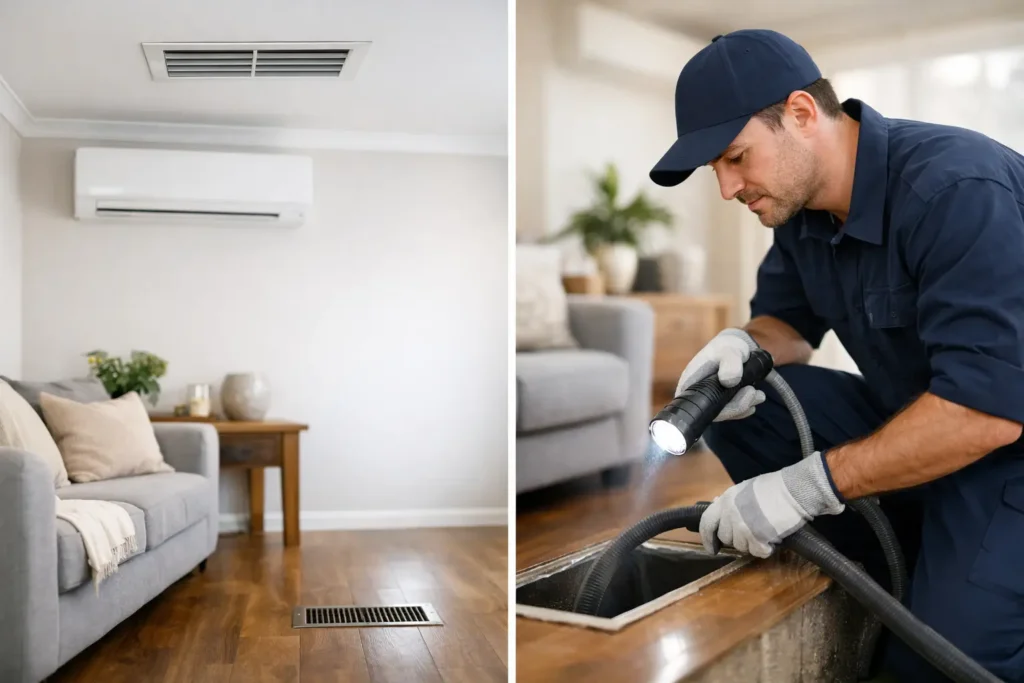
A ducted system can look perfectly normal at the vent while dust, odours and contaminants build up further inside the return air pathway and ductwork. Knowing when to book duct sanitising helps you act before stale air, reduced airflow or hygiene concerns become a bigger issue for your home, tenants, staff or customers.
Duct sanitising is not a substitute for proper duct cleaning. It is a targeted treatment applied after contaminants have been professionally removed, helping to address lingering odours and hygiene concerns within suitable HVAC components. The right timing depends on how the property is used, who occupies it and what the system has been exposed to.
When to book duct sanitising after a duct clean
The best time to arrange sanitising is immediately after a thorough professional clean. Cleaning removes accumulated dust, fine debris, pet hair and other material from accessible ductwork, vents and system components. Sanitising can then be used as an additional hygiene measure, rather than being sprayed over a surface that still carries a layer of build-up.
This sequence matters. A treatment cannot compensate for blocked returns, heavy dust inside ducts or neglected filters. If airflow has dropped or vents are visibly dirty, the priority is to inspect and clean the system properly first.
For many well-maintained Melbourne households, duct cleaning and sanitising may be worth considering every two to three years. However, there is no single interval that suits every property. A home with shedding pets, frequent allergy symptoms, ongoing renovations or high levels of dust may need attention sooner. Commercial systems can require a more regular maintenance schedule because they run longer, serve more people and are exposed to higher foot traffic.
Signs it is time to arrange duct sanitising
A persistent musty or stale smell when heating or cooling starts is one of the clearest reasons to investigate your ducts. Odours can come from several sources, including dust, moisture, pet dander, pest activity or contamination around vents and return-air grilles. Sanitising may help once the source has been identified and the affected areas have been cleaned.
You should also book an inspection if household dust seems to return unusually quickly after cleaning. Some dust in any lived-in property is normal, particularly during Melbourne’s drier periods or where windows are regularly open. But excessive dust around supply vents, on furniture or near return grilles can point to a dirty system, poor filtration or ductwork that needs professional attention.
Other practical warning signs include:
- visible grime around vents or inside accessible returns
- a noticeable reduction in airflow from one or more rooms
- allergy or respiratory irritation that appears worse while the system is running
- evidence of insects, rodents or pest droppings near ducts or ceiling spaces
- water damage, leaks or condensation concerns affecting HVAC areas
- a recent smoke event, strong cooking odours or other contamination within the property.
These signs do not automatically mean the ducts are the cause. Allergies and odours can have many sources, from carpets and soft furnishings to damp building materials. A professional assessment avoids guesswork and identifies whether duct cleaning, sanitising, filter replacement or another maintenance step is the appropriate response.
Book after renovations, move-ins and property damage
Renovation dust is exceptionally fine and travels further than most people expect. Sanding, plastering, cutting timber and demolition work can send particles through open vents and return-air grilles, particularly if the HVAC system has been used during the works. Even when vents were covered, it is sensible to inspect the system before relying on heating or cooling again.
Duct sanitising is often a sensible add-on after a post-renovation duct clean, especially where the property has been closed up during the project and has retained a dusty or stale smell. It is also useful for homes being prepared for new occupants, provided the ducts have first been cleaned to a suitable standard.
For property managers, a change of tenancy is a practical time to review ducted heating and cooling hygiene. It creates a clear maintenance point, supports a clean handover and can reveal issues such as damaged grilles, blocked returns or filter neglect before they become an urgent tenant complaint.
After water ingress, flooding, a roof leak or visible mould, act promptly rather than simply booking sanitising. Moisture problems need to be rectified at their source. If moisture remains in insulation, ducts or building cavities, odours and microbial growth can return. A qualified technician can assess the ductwork, recommend cleaning where appropriate and explain whether affected sections need further repair or replacement.
Homes with allergies, pets and young children
If someone in the household has allergies, asthma or sensitivity to dust, clean air pathways become more than a comfort issue. A dirty ducted system may circulate dust and allergens each time it operates, although it is only one part of the overall indoor-air-quality picture.
Homes with pets usually accumulate hair and dander faster, particularly when returns sit close to floors or favourite sleeping spots. Regular vacuuming of grilles, prompt filter changes and a professional clean when build-up is evident will make a meaningful difference. Sanitising can be considered after cleaning if odours persist or hygiene is a concern.
Families with babies, older residents or people recovering from illness may also prefer a proactive maintenance approach. The aim is not to promise a sterile home – no ordinary home is sterile – but to reduce avoidable dust and maintain a cleaner, fresher HVAC system.
When commercial properties should act sooner
Schools, offices, retail spaces and multi-use buildings often need a planned HVAC maintenance programme rather than an occasional reactive booking. Systems operate across long days, draw in more particulate matter and serve people with different health needs. A complaint about a stuffy meeting room or dusty classroom can quickly affect comfort, productivity and confidence in the building’s maintenance standards.
Commercial kitchens, gyms, childcare settings and medical-adjacent workplaces may have particular hygiene expectations. Their ventilation requirements vary, so duct sanitising should be matched to the type of system and the conditions it handles. Exhaust systems, split systems and ducted comfort cooling are not maintained in exactly the same way.
For facilities managers, schedule a review after fit-outs, building works, pest incidents, water damage or repeated complaints about odours and airflow. Keeping service records also makes it easier to plan budgets and demonstrate that reasonable maintenance has been carried out.
Do not wait for the system to fail
Duct sanitising is most effective as part of preventative care, not as a last-minute fix after the system has become heavily soiled. Waiting until rooms smell unpleasant or airflow is poor can mean the job is more involved. It can also place extra strain on heating and cooling equipment as it works harder to move air through dirty filters and restricted pathways.
That said, not every dusty vent requires immediate sanitising. If the system is relatively new, filters are maintained and there are no odours, pests, moisture concerns or health-related triggers, routine inspection and filter care may be enough for now. Honest advice should be based on the condition of your system, not a one-size-fits-all sales schedule.
A professional service should use appropriate equipment, contain dislodged debris with HEPA filtration and explain what has been found before recommending additional treatment. Ask what areas will be cleaned, whether filters need replacing and why sanitising is suitable for your particular system. Clear answers and transparent pricing are part of a dependable service.
A cleaner system starts with the right inspection
If your ducted heating or cooling has been through a renovation, a tenancy change, a pest issue, water damage or months of heavy use, now is a sensible time to arrange an assessment. Top Air Duct Cleaning provides professional duct cleaning and sanitising support across Melbourne, with fully insured technicians, transparent quotes and same-day service availability where possible.
Cleaner air is rarely about one dramatic fix. It comes from addressing the cause, maintaining the system properly and booking help before small hygiene issues affect the comfort of the people inside. For a free quote, call 0457 666 469 or visit www.topairductcleaning.com.au.
